
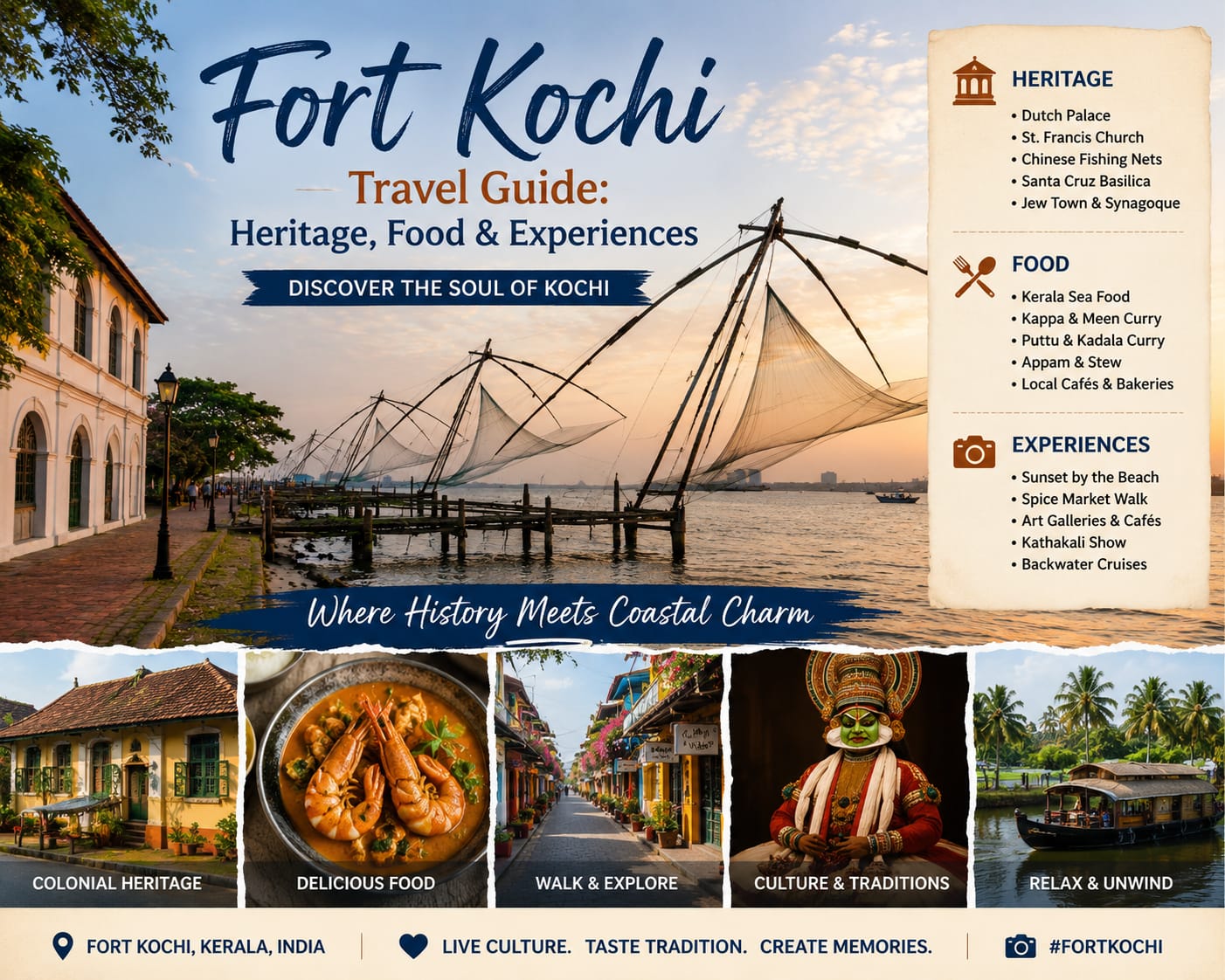
Few places in Kerala carry as many layers of history in such a small stretch of land as Fort Kochi. Within a few kilometers, you can walk past Portuguese-era churches, Dutch colonial homes, Jewish synagogues, and British-period bungalows, all set against the backdrop of iconic Chinese fishing nets swaying by the water. This Fort Kochi travel guide is built for travelers who want more than a passing glance, offering a clear picture of what to see, eat, and experience across a well-planned visit.
Whether you have a few hours or a full day, Fort Kochi rewards those who slow down and explore its lanes on foot rather than rushing between landmarks by car. If you’re planning transport for the day, our taxi services in Kerala can help you get there comfortably and combine it with other nearby sights.
A Brief History That Shapes What You See
Fort Kochi’s layout and buildings reflect nearly five centuries of colonial presence, and knowing this history adds context to almost everything you’ll see on a walk through the area.
Portuguese arrival
The Portuguese were the first Europeans to settle here in the early 1500s, building fortifications and churches, including what is believed to be one of the oldest European churches in India.
Dutch period
The Dutch took over in the mid-1600s, leaving behind civic buildings and the distinct architectural influence still visible in the Dutch Cemetery and several heritage homes.
British era
The British controlled the region last, and much of Fort Kochi’s colonial bungalow architecture and administrative buildings date to this period, some of which are now boutique hotels and cafes.
This layered Fort Kochi history is part of what makes the town feel unlike anywhere else in Kerala, and it’s worth keeping in mind as you move between sites.
Fort Kochi Heritage Sites You Shouldn’t Miss
These Fort Kochi heritage sites form the backbone of most sightseeing routes and are best explored on foot given how close they sit to one another.
- St. Francis Church, believed to be one of the earliest European churches built in India, and historically significant as the original burial site of explorer Vasco da Gama
- Santa Cruz Basilica, known for its pastel exterior and detailed ceiling paintings
- Mattancherry Palace, also called the Dutch Palace, home to preserved murals depicting Hindu mythology
- Jew Town and the Paradesi Synagogue, one of the oldest active synagogues in the Commonwealth, surrounded by antique shops and spice warehouses
- The Dutch Cemetery, a quiet, lesser-visited site that reflects the area’s Dutch colonial period
Chinese Fishing Nets: An Iconic Fort Kochi Experience
No Fort Kochi sightseeing itinerary is complete without a stop at the Chinese fishing nets along the waterfront. These massive cantilevered nets are believed to have been introduced by traders from the court of Kublai Khan, and they remain in daily use by local fishermen.
The best time to watch these nets in action is late afternoon into early evening, when the changing light over the harbour makes it a popular spot for photographers. Freshly caught fish is often sold right at the shore, and a few nearby stalls will grill your pick on request.
Fort Kochi Food Guide: What to Eat
A Fort Kochi food guide isn’t complete without covering both its Kerala roots and the layers of influence left behind by colonial trade routes.
Seafood specialties
Karimeen (pearl spot fish) pollichathu, prawn curry with kokum, and grilled catch from the fishing nets are staples worth seeking out.
Kerala breakfast classics
Appam with stew, puttu with kadala curry, and idiyappam are widely available at small local eateries, offering an authentic start to the day.
Cafe culture
Fort Kochi’s colonial buildings house a growing number of cafes serving continental breakfasts, strong filter coffee, and baked goods, popular with both travelers and locals.
Spice and tea tasting
Given the area’s trading history, several shops in Jew Town offer spice tastings and locally sourced tea, making for an easy, low-cost cultural stop.
Things to Do in Fort Kochi Beyond Sightseeing
Beyond the well-known landmarks, there are several things to do in Fort Kochi that add texture to a visit.
- Browse Jew Town’s antique shops for old maps, furniture, and curios tied to the spice trade era
- Watch a Kathakali or Kalaripayattu performance at one of the cultural centers in the evening
- Take a Fort Kochi walking tour through its quieter residential lanes to see restored heritage homes up close
- Visit during the Kochi-Muziris Biennale (held periodically) for a mix of heritage architecture and contemporary art installations
- Take a short backwater or harbour boat ride for views of the coastline from the water
A Simple One Day Fort Kochi Itinerary
For travelers short on time, this structure covers most major sites without feeling rushed.
- Morning: Start at St. Francis Church and Santa Cruz Basilica, then walk toward Mattancherry Palace
- Midday: Explore Jew Town and the Paradesi Synagogue, followed by lunch at a local seafood restaurant
- Afternoon: Browse antique shops and take a slower walk through the Dutch Cemetery area
- Evening: End at the Chinese fishing nets for sunset views, followed by dinner at a waterfront cafe
Best Time to Visit Fort Kochi
The best time to visit Fort Kochi is between October and March, when the weather is dry and comfortable for walking. Monsoon months (June to September) bring heavy rain that can disrupt outdoor sightseeing, though the area’s colonial architecture takes on a distinct, moody charm during this period for travelers who don’t mind the weather.
How This Fits Into a Broader Kerala Trip
Fort Kochi pairs naturally with a wider South India itinerary, often combined with hill station stops like Munnar or backwater experiences in Alleppey. Given its central location near Kochi, it also works well as a half-day stop before or after an airport taxi transfer, or as part of a structured multi-city tour package covering Kerala’s major cultural and heritage routes. For custom itineraries built around Fort Kochi and nearby destinations, you can get in touch with our team directly, or learn more about Kerala Dayz and how we plan these trips.
Frequently Asked Questions
How much time do I need to see Fort Kochi properly? A full day allows a relaxed pace covering the major heritage sites, food stops, and the fishing nets at sunset. If short on time, a well-planned half-day can still cover the essential landmarks.
Is Fort Kochi walkable, or do I need transport between sites? Most major heritage sites are within comfortable walking distance of each other, making a Fort Kochi walking tour the easiest way to experience the area without missing details a car ride would skip past.
What is Fort Kochi best known for? It’s best known for its layered colonial history, spanning Portuguese, Dutch, and British periods, along with the iconic Chinese fishing nets and its active Jewish heritage quarter in Jew Town.
Is Fort Kochi worth visiting if I’ve already seen Kochi city? Yes. Fort Kochi feels distinctly different from the rest of Kochi, with a slower pace, colonial architecture, and a concentration of heritage sites not found elsewhere in the city.
What is the best time of day to see the Chinese fishing nets? Late afternoon into early evening offers the best light for photos and the chance to see fishermen actively working the nets, often with freshly caught fish available right at the shore.